


Vehicle Spotlight: Nissan Murano

Some vehicles earn attention through raw numbers. The Nissan Murano earned it through design. When it arrived in the early 2000s, the midsize crossover segment was still finding its identity, populated largely by boxy shapes that looked like scaled-down SUVs. The Murano showed up with curves, glass, and confidence, borrowing its name from the Venetian island known for centuries of artisan glassmaking. That name was not an accident. Nissan wanted a vehicle that felt crafted rather than assembled.
More than two decades later, the Murano still follows that original brief. It has never chased three rows, aggressive off-road credentials, or headline horsepower figures. Instead it offers two rows of genuinely comfortable seating, a quiet cabin, and styling that consistently looks a segment above its price. For owners, that distinctive appearance is exactly what makes keeping the exterior sharp worth the effort.
Brief History and Heritage of the Nissan Murano
The Murano debuted in 2002 and reached North American showrooms as a 2003 model, marking Nissan's first entry into the crossover segment in this market. It was built on Nissan's FF-L front-engine, front-drive platform, which shared elements with the Altima. The first generation paired a 3.5-liter VQ V6 with an Xtronic continuously variable transmission at a time when few competitors offered one, and its sweeping rear glass and rounded proportions made it instantly recognizable in parking lots full of squared-off rivals.
The second generation arrived for 2009 with a more polished execution of the same idea, adding interior refinement and a smoother ride without diluting the silhouette. This era also produced the Murano CrossCabriolet, a two-door convertible crossover that remains one of the more memorable design experiments of the period.
The third generation, introduced for 2015, is the one most people picture today. Drawing directly from Nissan's Resonance concept, it brought the V-Motion grille, boomerang lighting signatures, and a floating roof treatment that previewed styling cues appearing across later Nissan models.
The fourth generation, launched for the 2025 model year, marks the biggest mechanical shift yet. The V6 and CVT gave way to a 2.0-liter VC-Turbo four-cylinder paired with a nine-speed automatic, while the exterior traded flowing curves for cleaner, more architectural surfaces and ultra-thin lighting.
Key Features and Specifications

The Murano has always positioned itself as the comfortable, design-forward choice in a segment full of practical compromises. Safety has also remained central to the Murano's appeal, with the current generation offering a comprehensive suite of driver-assistance technologies designed to help protect occupants and prevent collisions. Here is what defines the current car and what carried through from earlier generations.
VC-Turbo Powertrain
The current Murano uses Nissan's variable compression turbo engine, producing 241 horsepower and 260 lb-ft of torque through a nine-speed automatic transmission. EPA figures reach up to 21 mpg city, 27 mpg highway, and 23 mpg combined, with Intelligent All-Wheel Drive available. Generations built through 2024 used the 3.5-liter V6 and a CVT instead, so powertrain details differ significantly depending on the model year you own.
Zero Gravity Seating
Nissan's Zero Gravity seats, developed with research into spinal posture and pressure distribution, remain a signature Murano feature. Long highway stretches simply fatigue you less. The current model extends that comfort focus with available heated, ventilated, and massaging front seats, plus Zero Gravity outboard positions in the rear.
Cabin Technology
Dual 12.3-inch displays anchor the current dashboard, running NissanConnect with wireless Apple CarPlay and Android Auto. Available 64-color ambient LED lighting, an available panoramic moonroof, and available semi-aniline leather on upper trims push the interior close to entry-luxury territory.
Safety Shield 360
Every current Murano includes Nissan Safety Shield 360, covering automatic emergency braking with pedestrian detection, rear automatic braking, blind spot warning, rear cross traffic alert, lane departure warning, and high beam assist. Hands-on ProPILOT Assist is standard, and ProPILOT Assist 2.1 is available on higher configurations.
Distinctive Exterior Design
From the first generation's sweeping glass to today's slim LED lighting and full-width tail lamp, the Murano's bodywork has always been its calling card. Panel surfaces are broad, smooth, and highly visible, which is precisely why replacement components need to be right.
Pre-Painted Car Parts for Nissan Murano
The Murano's appeal lives on its surfaces. Large, uninterrupted body panels, a strong shoulder line, and carefully shaped bumper covers work together to create the visual flow that makes this crossover stand out. Those same broad panels are unforgiving. A mismatched bumper cover or a hastily refinished fender reads immediately, especially on the deep metallics and pearls Nissan favors for this model.
That is where quality pre-painted parts deliver real value. At Painted OEM Parts, every component is finished by trained painters using a multi-stage process with premium materials, built to match factory appearance rather than approximate it. We work from your vehicle's VIN and paint code, using precision color matching to identify the right formula for your car. Worth knowing: a paint code names the color, while the formula is what actually reproduces it, and two vehicles wearing the same code can call for different formulas. For unique finishes or situations that need extra certainty, you can send us a physical paint sample for custom matching.
The practical benefit is straightforward. Your part arrives painted and ready to install, which reduces the time and coordination involved compared with sourcing an unpainted component and arranging separate refinishing. Genuine OEM parts come from the vehicle manufacturer and offer guaranteed fitment, while OE Replacement parts are a more budget-conscious aftermarket alternative that our team inspects carefully, though fitment is not guaranteed. For the newest model years, OE Replacement options often are not available yet, so Genuine OEM is typically the route. Every painted finish is backed by our lifetime warranty covering fading, peeling, and cracking under normal wear and tear. You can see exactly how each part is finished on our paint process page.
Available Pre-Painted Car Parts for Nissan Murano
Front Bumper and Cover

Year and Model | Type |
2026 Nissan Murano Front Bumper | |
2025 Nissan Murano Front Bumper | |
2024 Nissan Murano Front Bumper | |
2023 Nissan Murano Front Bumper | |
2022 Nissan Murano Front Bumper |
Rear Bumper

Year and Model | Type |
2024 Nissan Murano Rear Bumper | |
2023 Nissan Murano Rear Bumper | |
2022 Nissan Murano Rear Bumper | |
2021 Nissan Murano Rear Bumper | |
2020 Nissan Murano Rear Bumper |
Rear Bumper Side Panel

Year and Model | Type |
2026 Nissan Murano Rear Bumper Side Panel | |
2025 Nissan Murano Rear Bumper Side Panel |
Front Tow Hook Cover

Year and Model | Type |
2026 Nissan Murano Front Tow Hook Cover | |
2025 Nissan Murano Front Tow Hook Cover | |
2024 Nissan Murano Front Tow Hook Cover | |
2023 Nissan Murano Front Tow Hook Cover | |
2022 Nissan Murano Front Tow Hook Cover |
Front Fender
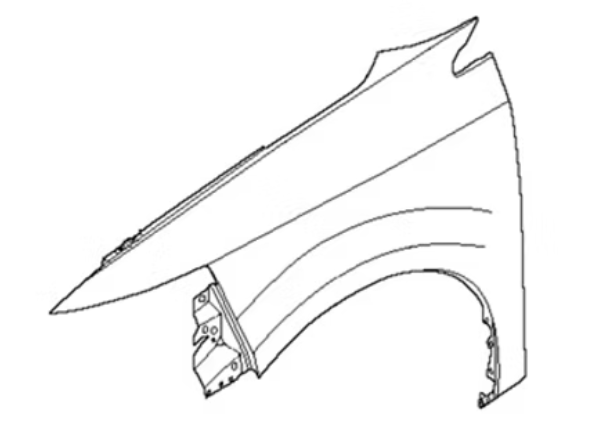
Year and Model | Type |
2026 Nissan Murano Front Fender | |
2025 Nissan Murano Front Fender | |
2024 Nissan Murano Front Fender | |
2023 Nissan Murano Front Fender | |
2022 Nissan Murano Front Fender |
Fuel Door

Year and Model | Type |
2026 Nissan Murano Fuel Door | |
2025 Nissan Murano Fuel Door | |
2024 Nissan Murano Fuel Door | |
2023 Nissan Murano Fuel Door | |
2022 Nissan Murano Fuel Door |
Side Mirror Cover

Year and Model | Type |
2024 Nissan Murano Side Mirror Cover | |
2023 Nissan Murano Side Mirror Cover | |
2022 Nissan Murano Side Mirror Cover | |
2021 Nissan Murano Side Mirror Cover | |
2020 Nissan Murano Side Mirror Cover |
Maintenance Tips for Your Nissan Murano
The Murano rewards consistent, unglamorous maintenance. Requirements differ meaningfully across generations, so the owner's manual for your specific model year should always be the final word.
Powertrain Care
For the 2025-and-newer Murano, follow Nissan's recommended oil change schedule and use the specified oil for the VC-Turbo engine. Earlier generations use naturally aspirated V6 engines with different service requirements. On CVT-equipped models, following the correct CVT fluid inspection and replacement guidance for your model year is an important part of transmission maintenance.
All-Wheel Drive Service
If your Murano is equipped with all-wheel drive, the transfer case and rear differential fluids need attention on schedule. Follow the tire rotation interval specified for your model year, since Nissan's recommendations have varied across Murano generations. On all-wheel drive models, keep tire size, type, and tread depth appropriately matched when replacing tires.
Paint and Exterior Care
Wash regularly using the two-bucket method to avoid inflicting swirl marks on those large, highly visible panels, and apply a quality wax or sealant every few months. Pay close attention to lower doors, rocker areas, and behind the wheels where road salt and stone chips collect. Address chips early before moisture reaches bare metal.
Electronics and Cabin
Keep infotainment software current and have the battery tested periodically, especially as it ages, because a weak battery can contribute to electrical and electronic problems. Condition leather surfaces occasionally and use UV protectant on the dash and door panels if the vehicle lives outdoors.
Frequently Asked Questions
Is the Nissan Murano reliable for long-term ownership?
Long-term reliability varies by model year, drivetrain, mileage, and maintenance history, so records matter more than generalizations when shopping used. On older CVT models, transmission service history is the detail worth investigating most carefully. The VC-Turbo powertrain is still relatively new to the Murano, so its long-term record is developing.
Can I replace Murano body panels myself?
Many exterior components are manageable for a mechanically confident owner. Bumper covers, mirror covers, and trim pieces typically involve removing bolts and clips, unplugging any electrical connectors, and transferring hardware to the new part. Working with a second person and reviewing a model-specific video or owner forum thread first makes the job considerably easier.
Are parts still available for older Nissan Murano models?
Nissan and aftermarket suppliers continue to offer replacement parts for earlier Murano generations, though availability varies by year and by component. For exterior panels and covers, pre-painted replacements are often the most practical route, arriving color matched and ready to install.
Conclusion
The Nissan Murano has spent more than twenty years proving that a family crossover does not have to look like an appliance. From the glass-inspired curves of the original to the sharp architectural lines of the current car, it has consistently offered comfort, quietness, and design confidence that punch above its segment. That is a genuinely rare combination, and it is worth protecting.
When a bumper cover cracks or a fender gets dented, the fix does not have to mean an extended stay at a body shop or a bill that outweighs the damage. At Painted OEM Parts, we finish every component with precision color matching and a careful, multi-stage paint process, then back our work with a lifetime warranty on the finish. Our goal is simple: your replacement part should look like it was always there.
Ready to bring your Murano's appearance back to where it belongs? Contact us today to find precision-matched components for your vehicle, painted to your exact color specification and delivered ready to install.
Comments