


Vehicle Spotlight: Hyundai Kona

Some vehicles enter a segment quietly. The Hyundai Kona arrived with its elbows out. When it launched, the subcompact crossover class was a sea of tall, sensible hatchbacks in shades of silver, and Hyundai answered with split lighting, chunky wheel arch cladding, and paint colors named after mangoes and surf. It was a small SUV that behaved like a fashion statement, and buyers responded immediately.
What kept the Kona relevant, though, was substance underneath the styling. Depending on the market and model year, Hyundai has offered the Kona with gas, hybrid, and fully electric powertrains, an unusually broad range of choices for a vehicle this size and price. Add a genuinely useful cabin, factory warranty coverage that in the U.S. runs 5 years or 60,000 miles on the vehicle and 10 years or 100,000 miles on the powertrain, and driving manners that feel more polished than the sticker suggests, and the Kona becomes easy to recommend and easy to live with.
Today we will look at how the Kona evolved, what makes the current version stand out, and how to keep its distinctive appearance intact long after the new car smell fades.
Brief History of the Hyundai Kona
The Kona debuted in 2017 for the 2018 model year, slotting beneath the Tucson as Hyundai's entry into the booming subcompact crossover market. The first generation, known internally as the OS, immediately grabbed attention with a split headlight arrangement that placed slim daytime running lights above the main projectors, a look that felt genuinely unusual at the time. U.S. buyers chose between a 2.0 liter four cylinder and a 1.6 liter turbocharged engine rated at 175 horsepower and 195 lb-ft of torque, the latter paired with a seven speed dual clutch transmission.
Hyundai expanded the lineup quickly. The Kona Electric reached American showrooms for 2019 with a 64 kWh battery and an EPA range figure that embarrassed several more expensive rivals. In 2022, the performance oriented Kona N brought a 276 horsepower turbocharged engine, an eight speed wet dual clutch gearbox, and a chassis tuned by the same team behind the Veloster N.
The second generation arrived for the 2024 model year and marked a philosophical shift. Hyundai designed this version around the electric variant first, then adapted the styling for the gas, hybrid, and N Line models, which is why the current Kona grew noticeably in length and wheelbase while gaining significantly more rear seat and cargo room. The new design traded the split headlights for a full width "Seamless Horizon" light bar that stretches across the nose and repeats at the rear, giving the Kona one of the most recognizable lighting signatures in its class.
Key Features and Specifications
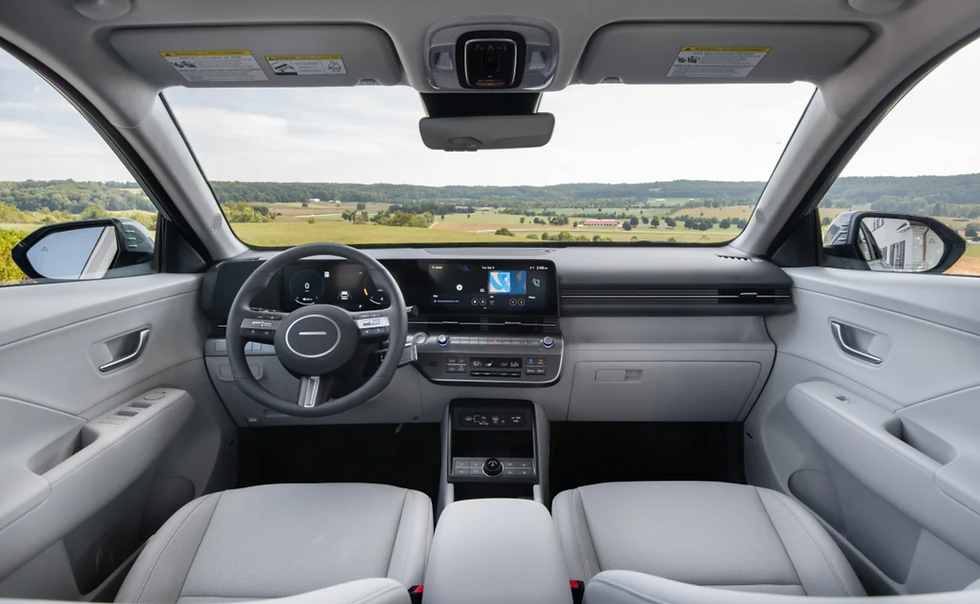
The Kona competes in a crowded field, and Hyundai's strategy has been to offer more of what shoppers actually notice rather than chasing specification sheet victories. The result is a small crossover that feels a class above its price in the areas owners interact with daily.
Two Distinct Gas Powertrains
The standard 2.0 liter four cylinder produces 147 horsepower and 132 lb-ft of torque through an Intelligent Variable Transmission, prioritizing smooth, efficient commuting. Buyers wanting more urgency can step up to the 1.6 liter turbocharged GDI four cylinder, rated at 190 horsepower and 195 lb-ft of torque with an eight speed automatic. Hyundai's HTRAC all wheel drive is available across the gas powered Kona lineup, and AWD models use an independent multi-link rear suspension in place of the torsion beam setup found on front wheel drive versions.
Fuel economy varies by engine, drivetrain, and trim, so anyone cross shopping Kona configurations should check the EPA's current ratings for the exact version they are considering.
A Genuinely Modern Cabin
Current Kona models feature a wide 12.3 inch touchscreen. Higher trims pair that screen with a matching 12.3 inch digital instrument cluster, creating a panoramic dual screen layout across the dash. Wireless Apple CarPlay and Android Auto are standard, and Hyundai wisely retained physical climate controls rather than burying every function in a menu.
Design That Rewards Care
From the wraparound light bar to the sculpted lower cladding and the available two tone roof treatments, the Kona is defined by contrast and detail. Its body panels shape the vehicle's character and manage airflow, and because the design deliberately draws attention to the front and rear fascias, those surfaces carry a lot of visual weight.
Standard Safety Content
Hyundai SmartSense arrives well equipped on the current Kona. On the current U.S. models, standard features include Forward Collision-Avoidance Assist, Lane Keeping Assist, Lane Following Assist, Blind-Spot Collision Warning, and Smart Cruise Control with Stop and Go.
Pre-Painted Car Parts for Hyundai Kona
The Kona is a vehicle people buy with their eyes. Its layered front end, pronounced arches, and bold color palette were engineered to stand out in a parking lot, which means a scuffed bumper cover or a chipped front fender stands out just as clearly. On a design this deliberate, exterior condition is not a minor detail. It is most of the impression the car makes.
That is where a properly painted replacement part earns its keep. Every component we finish goes through a controlled, multi-step paint process handled by trained painters, using premium basecoats and clearcoats applied in a clean booth environment. Our precision color matching technology starts with your vehicle's VIN and paint code, which helps us identify the factory paint formula associated with your vehicle rather than relying on a generic color approximation. For unusual or custom finishes, we can also scan a physical paint sample you send us.
The practical benefit is straightforward. Parts arrive painted, inspected, and ready to install, so there is no separate trip to source the component and no second appointment to have it sprayed. You can choose genuine OEM or OE Replacement depending on your budget and your plans for the vehicle, and every painted finish we ship is backed by our lifetime warranty against fading, peeling, and cracking under normal wear and tear.
Available Pre-Painted Car Parts for Hyundai Kona
Front Bumper and Cover

Year and Model | Type |
2023 Hyundai Kona Upper Front Bumper | |
2023 Hyundai Kona EV Front Bumper | |
2022 Hyundai Kona Upper Front Bumper | |
2022 Hyundai Kona EV Front Bumper | |
2021 Hyundai Kona Front Bumper Cover | |
2021 Hyundai Kona EV Front Bumper Cover | |
2020 Hyundai Kona Front Bumper Cover | |
2020 Hyundai Kona EV Front Bumper Cover | |
2019 Hyundai Kona Front Bumper Cover | |
2019 Hyundai Kona EV Front Bumper Cover | |
2018 Hyundai Kona Front Bumper Cover |
Rear Bumper

Year and Model | Type |
2023 Hyundai Kona EV Rear Bumper | |
2022 Hyundai Kona EV Rear Bumper | |
2021 Hyundai Kona Rear Bumper Molding | |
2021 Hyundai Kona EV Rear Bumper Molding | |
2020 Hyundai Kona Rear Bumper Molding | |
2020 Hyundai Kona EV Rear Bumper Molding | |
2019 Hyundai Kona Rear Bumper Molding | |
2019 Hyundai Kona EV Rear Bumper Molding | |
2018 Hyundai Kona Rear Bumper Molding |
Front Tow Hook Cover

Year and Model | Type |
2023 Hyundai Kona EV Front Tow Hook Cover | |
2022 Hyundai Kona EV Front Tow Hook Cover | |
2021 Hyundai Kona Front Tow Hook Cover | |
2021 Hyundai Kona EV Front Tow Hook Cover | |
2020 Hyundai Kona Front Tow Hook Cover | |
2020 Hyundai Kona EV Front Tow Hook Cover | |
2019 Hyundai Kona Front Tow Hook Cover | |
2019 Hyundai Kona EV Front Tow Hook Cover | |
2018 Hyundai Kona Front Tow Hook Cover |
Side Mirror Cover

Year and Model | Type |
2025 Hyundai Kona Side Mirror Cover | |
2024 Hyundai Kona Side Mirror Cover |
Maintenance Tips for Your Hyundai Kona
The Kona is a straightforward vehicle to own, but a few areas reward consistent attention, particularly on turbocharged models and on any Kona that spends its life outdoors.
Turbocharged Engine Care
If your Kona uses the 1.6 liter turbo, oil quality matters more than it does on the naturally aspirated 2.0 liter. Turbochargers spin at extreme speeds and temperatures, and they depend on clean oil for bearing lubrication. Stick to Hyundai's recommended oil specification and service interval, and pay particular attention to oil level and condition if the vehicle sees frequent short trips, heavy traffic, or other severe driving conditions.
Transmission and Drivetrain
IVT equipped models benefit from fluid checks at the intervals Hyundai specifies, and AWD Konas need periodic attention to the rear differential and transfer case fluid. Neither service is expensive, and both are far cheaper than the repairs that follow neglect.
Interior and Electronics
The wide display setup and driver assistance features rely on current software and a healthy electrical system. Because the Kona depends on numerous electronic systems, keep the 12 volt battery in good condition and address warning lights or unexplained electrical behavior promptly rather than waiting to see if they clear on their own.
Exterior Preservation
Wash regularly using proper technique to avoid introducing swirl marks, and apply a quality wax or sealant a few times a year. Pay attention to the lower fascias and rocker areas where road debris collects. Address chips and scratches early, and when a bumper cover, fender, or mirror cap is damaged beyond repair, a painted replacement restores the look without a body shop visit.
Frequently Asked Questions
Will a pre-painted part match my Kona if the original paint has aged?
New paint mixed to your factory formula will match the color your Kona left the factory wearing. If your existing finish has faded from years of sun exposure, a fresh panel may look slightly brighter by comparison. This is normal, expected, and typically far less noticeable than the damage it replaces.
Are replacement parts available for the newest Kona model years?
On a current model year vehicle, OE Replacement options are typically limited or not yet developed, so genuine OEM is usually where owners start. That is normal for a newly launched model, and OE Replacement availability tends to broaden as a vehicle spends more time on the road. Genuine OEM components come from the manufacturer, which makes fitment the most predictable.
Can I install a Kona bumper cover myself?
Many owners can. The job involves removing fasteners along the top edge, in the wheel well areas, and along the underside, then unplugging any sensors or fog lamps before transferring hardware to the new cover. Plan on a helper to support the panel, and look up a walkthrough specific to your model year first.
Conclusion
The Hyundai Kona proved that an affordable crossover does not have to be anonymous. Across two generations, it has combined expressive design, a genuinely broad powertrain lineup, and equipment levels that consistently punch above the sticker price. Whether you own an early split headlight model or the latest version with its full-width light bar, the Kona's appeal has always been tied closely to how it looks.
That is exactly why we think keeping the exterior sharp is worth doing properly. At Painted OEM Parts, our components are matched to your vehicle's factory paint formula, painted by hand through a controlled process, and delivered ready to bolt on, so restoring your Kona's appearance does not mean surrendering it to a body shop for a week. With proven quality workmanship and our lifetime warranty on every painted finish reflects the confidence we have in that work.
Ready to bring your Kona's appearance back to where it should be? Contact us today to find precision matched components for your vehicle, and let us help you get it looking right again.
Comments