


Why the Cheapest Car Part Isn't Always the Best Choice: The Hidden Cost of Bargain Bumpers & Body Parts
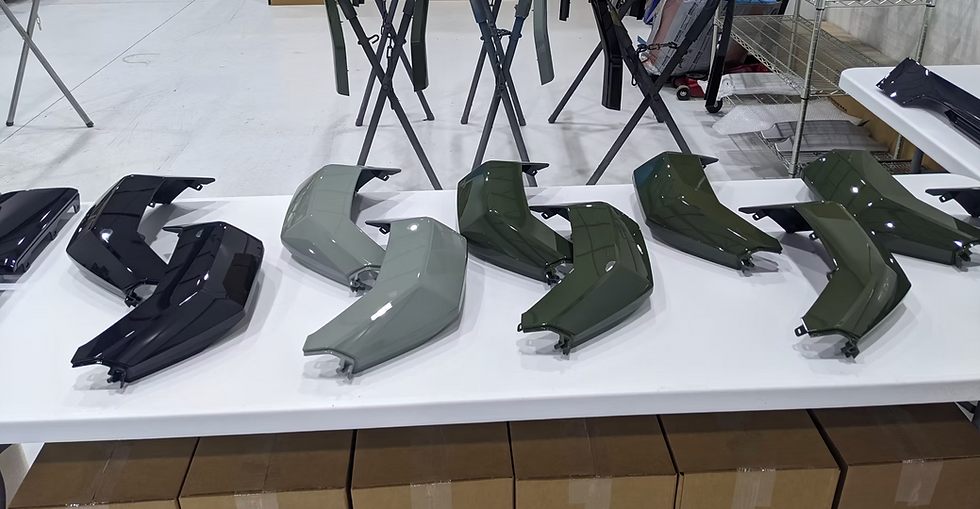
You back out of a parking spot, hear that awful plastic crunch, and suddenly you are shopping for a bumper cover at nine o'clock at night. Twenty tabs later, you find one for a fraction of what everyone else is charging. Free shipping. Ships tomorrow. Done, right?
Maybe. Sometimes a low price is just a low price. But with exterior body parts, the number on the listing is only the first payment you make. The rest shows up later as a panel that will not line up, paint that looks off in daylight, peeling paint a year from now, or a second trip to the shop.
This is not an argument for always buying the most expensive option. It is an argument for knowing what you are paying for, so today's fix does not become next spring's project.
What "Cheap" Actually Means on a Body Part
A bumper cover, fender, or mirror cover does not need to survive combustion or hold pressure. These components shape your vehicle's appearance and help manage airflow. So when cost gets cut on them, the savings rarely show up as catastrophic failure. They show up in quieter ways:
Mounting tabs that sit a few millimeters off
Plastic that flexes differently and does not clip in cleanly
Surfaces that are slightly wavy, so light reflects unevenly
Paint that looks fine in the driveway and wrong under a streetlight
Potential paint quality issue down the road
None of that will strand you on the highway. All of it is visible every time you walk up to your car.
The Hidden Costs Behind the Cheapest Car Part in Your Search Results
When people compare two listings, they compare two numbers. The real comparison involves everything that happens after the box arrives.
Fitment Problems Cost You Twice
Panel gaps are unforgiving. A bumper cover that sits a quarter inch proud on one side is not something you stop noticing.
Poor fitment also creates work. You end up forcing tabs, snapping clips, and widening holes just to get the bolts to line up. If a shop is handling the install, that wrestling lands on your labor bill. If you are doing it yourself, it lands on your Saturday.
Genuine OEM parts generally offer the most consistent fit and require the fewest adjustments during installation. Quality OE replacement parts from reputable manufacturers are engineered to closely match OEM dimensions and usually fit well, though quality varies by manufacturer. The bargain tier is where fitment becomes a coin flip.
Not All Aftermarket Parts Are the Same
Worth saying plainly: aftermarket does not automatically mean inferior. There are tiers. CAPA-certified parts and panels from established manufacturers often come close to OEM fit and finish, while very low cost generic imports are where material quality and fitment get inconsistent. If you're considering an aftermarket replacement, look for parts from reputable manufacturers. Where available, CAPA-certified parts provide independent verification of fit and quality, though many reputable non-CAPA aftermarket parts also perform well.
Paint Is Where Bargain Parts Show Their Price
A cheap primed part still needs paint, and paint is where the money lives. Once you add materials, prep, spray time, and labor, the paint work costs more than the panel itself on many common repairs. That inexpensive fender was never inexpensive. It was unfinished.
The shortcuts here are predictable:
Spray cans. Aerosol application makes a factory-quality finish extremely difficult on large exterior panels, particularly with metallic and pearl colors.
Skipping prep. Adhesion problems on raw plastic and flexible substrates lead to peeling and chipping later.
Matching by code alone. Two vehicles can share a paint code and still need different formulas, because build location, production date, and paint batch all introduce variance.
A poorly matched pre-painted part can be more disappointing than a primed panel that gets professionally painted to match.
The Labor Bill Does Not Care What You Paid
A shop charges the same labor to install a good part as a poor one. If the cheap version warps or peels within a year, you pay that labor twice. Saving $200 on the part can easily turn into hundreds more in repeat labor, which is what people mean when the cheapest car part turns out to be the most expensive one.
Thin Warranties, or None at All
Look closely at how bargain listings handle coverage. Often there is a short return window, no paint coverage at all, and a return process that has you shipping a large panel back at your own expense.
A longer warranty usually reflects greater confidence in the product, though the terms matter more than the headline. Read what is actually covered, especially on the finish.
When the Cheap Option Genuinely Makes Sense
"Always buy premium" is bad advice. Lower cost parts are reasonable when:
The vehicle is older and you are weighing repair costs against its overall value
The component is unpainted or hidden, like a splash shield, bracket, or absorber
Color variation will not be noticeable, such as a mirror cover mounted on a black housing
You are preparing to sell and need the vehicle presentable
The question is not cheap versus expensive. It is whether the money you save creates a problem somewhere else.
A Quick Way to Judge Value Before You Buy
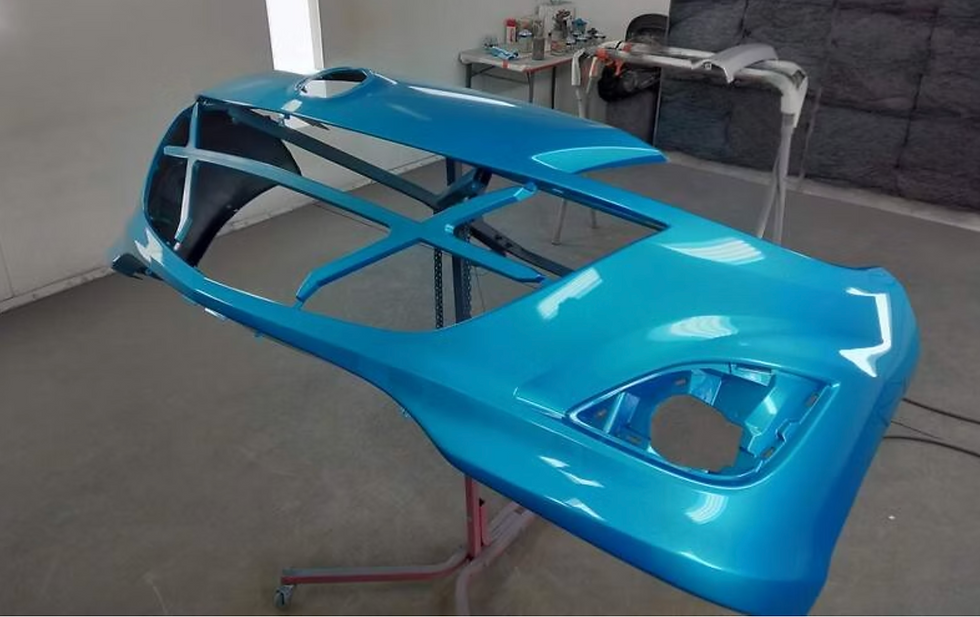
Does the price include paint? If not, add realistic paint costs before comparing.
What does the warranty cover on the finish? Not the part. The paint.
Is the part Genuine OEM or OE replacement? Vague sourcing is a warning sign.
How does the seller match color? A real answer separates serious shops from drop shippers.
What happens if it does not fit? Find out before you need to know.
Is the component even available pre-painted? Quarter panels, for example, weld to the vehicle rather than bolt on, so they are body shop work.
Where Pre-Painted Parts Change the Calculation
Buying a part already finished in your color removes the most expensive and most error-prone step. You are not sourcing a panel, finding a painter, then coordinating between them.
The quality of that finish comes down to workmanship: precise color formulation, thorough surface preparation, correct application on flexible substrates, and inspection before anything gets boxed.
The limits are worth stating too. Because your vehicle is not present during painting, the part is matched from your paint code or from a sample you send in, and it cannot be blended into adjacent panels the way a shop can on site. On a well-maintained finish, that produces an excellent match. On a heavily faded vehicle, new paint will look newer, which is normal regardless of who does the work.
Which is why the vendor matters more than the price. A serious one asks for your VIN and paint code, offers sample matching for aged finishes, sets honest expectations, and backs the finish in writing.
Frequently Asked Questions
Is an aftermarket bumper cover as good as an OEM one?
It depends on the manufacturer. Reputable OE replacement parts closely match OEM specifications for considerably less money. Very low cost imports are where fitment and finish get inconsistent.
Why does the same paint code look different on my replacement part?
Paint codes identify the color, not manufacturing variance. Build location, batch, and years of sun exposure all shift the result. A physical sample gives the most accurate match.
Do I need to wait before installing a freshly painted part?
Parts can generally be installed and driven immediately. Just avoid waxing, polishing, and harsh automatic washes for the first 30-45 days while the finish fully cures and hardens.
The Bottom Line
The cheapest car part on your screen is rarely the cheapest part you will own. Once you account for paint, labor, fitment, and the odds of doing the job twice, the real price often lands somewhere very different from the listing.
The better question is not "what costs the least" but "what gets this done once, correctly." When the bargain option is not the right call, precision-matched replacement parts are the simplest way to get the job done once.
At Painted OEM Parts, we combine exact color matching with expert craftsmanship to deliver factory-quality results. Since 2015, we've helped thousands of car owners restore their vehicles with pre-painted Genuine OEM and OE replacement parts, shipped nationwide from Loveland, Colorado and backed by our lifetime warranty.
Ready to experience the difference that precision makes? Get your perfect color match today and see why the right part beats the cheap one every time.
Comments