


New Car Paint Care: First 90 Days Do's and Don'ts

That new car smell. The showroom shine. The paint that looks so deep you could dive into it. Nothing quite matches the feeling of driving a brand new vehicle off the lot for the first time.
Here's something a lot of new owners don't realize: your factory finish is actually baked and cured before it ever reaches the dealership. So you don't need to tiptoe around it like it's still wet paint. What it does need, though, is a few smart habits in these early weeks, because a brand new surface with zero protective wear can still pick up swirl marks, water spots, or chips faster than you'd expect if you're not careful.
The good news is that protecting your new car's paint isn't complicated. It just means knowing what helps and what to avoid while you settle into ownership. This guide covers new car paint care for the first 90 days, so your finish stays looking showroom fresh for years to come.
New Car Paint Care, First 90 Days: Building the Right Habits
Factory paint goes through electrocoating, priming, base coat, clear coat, and then a bake cycle in industrial ovens as part of the manufacturing process. By the time your car has been built, shipped, and sat on a dealer lot, that finish has already reached its designed hardness.
So why do the first few months matter so much? A few reasons:
The paint hasn't built up any protective layer of wax or sealant yet
It has zero history of touch ups, so any new mark stands out immediately
Most owners haven't settled into a wash routine yet, which is when mistakes happen
In other words, this isn't about the paint being fragile. It's about setting good habits early, before a bad wash technique or an ignored chip turns into a bigger problem down the road.
Paint Do's: What Helps During the First 90 Days
Hand Wash Whenever Possible
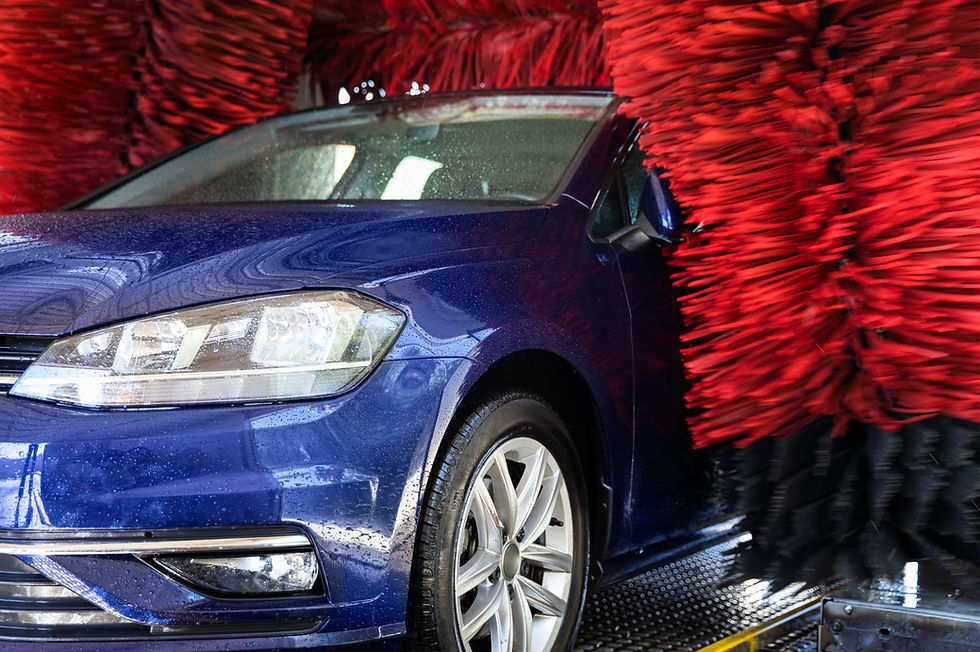
Skip the brush-style automatic car wash for now. Those spinning brushes are notorious for leaving fine scratches on any paint, new or old, and on a finish with no protective coating yet, those scratches are more noticeable.
Instead, hand wash using:
A pH-neutral, automotive-specific soap
A high-quality microfiber wash mitt
The two bucket method, one bucket for soap and one for rinsing your mitt
Touchless automatic washes are generally a safer alternative if you're short on time, though they do tend to use stronger detergents to compensate for the lack of physical scrubbing.
Wash in the Shade
Heat speeds up drying, and fast drying soap and water can leave mineral deposits and streaking behind. Wash your car when the surface is cool to the touch, ideally in a garage or shaded area, and avoid washing in direct sunlight.
Rinse Off Contaminants Promptly
Bird droppings, tree sap, and bug splatter are all acidic or sticky enough to etch clear coat if they sit for too long, especially once the sun heats them up. If you notice any of these on your car, rinse them off as soon as you reasonably can rather than waiting for your next full wash.
Park Smart
Parking in a garage or under covered parking protects the paint from UV exposure and reduces the odds of tree sap, pollen, or bird droppings landing on the car in the first place. UV damage is more of a long-term concern than something that shows up overnight, but building the habit now pays off for the life of the vehicle.
Keep Up with Light Maintenance
Regular, gentle care beats occasional deep cleaning. A light rinse and hand wash every one to two weeks, depending on conditions, keeps dust and light contaminants from building up and becoming harder to remove later.
Paint Don'ts: What to Avoid During the First 90 Days
Know When to Hold Off on Wax or Ceramic Coating
If your car still has its original factory finish, waxes, paint sealants, and ceramic coatings can generally be applied right away. Some dealerships even apply a coating before you drive off the lot. Check your owner's manual or ask your dealer if they recommend anything specific to your vehicle.
The "wait 30 to 90 days" advice you'll see floating around actually comes from collision repair and body shop refinishing, where a panel has been freshly repainted and needs time to fully cure before a wax or sealant traps solvents underneath. If you've recently had a panel repaired or replaced, it's worth asking the shop what paint system they used and how long they recommend waiting, since that timeline varies depending on the process.
Don't Use Brush Style Automatic Car Washes
Beyond the scratching risk mentioned earlier, brush washes can be rough on any finish, new or not. Stick to hand washing or a touchless wash when possible.
Don't Ignore Small Chips or Scratches
Even careful owners occasionally pick up a stone chip or a scratch from a shopping cart or a stray rock. Left untreated on metal panels, these small imperfections can allow moisture to reach the surface underneath and eventually lead to rust. Addressing minor damage early, whether through touch up paint or a proper repair, protects the investment you've made in the vehicle.
Don't Assume All Paint Damage Needs a Full Repaint
If a panel does get damaged beyond a simple touch up, whether from a parking lot mishap or something more significant, it doesn't automatically mean an expensive trip to the body shop is your only option. This is where a lot of owners are surprised to learn that pre-painted replacement parts exist as a straightforward alternative. Rather than waiting on a shop to strip, prime, and paint a new panel, a component that arrives already finished and color matched to your vehicle can often be installed by an experienced DIYer, sometimes with a friend's help and a bit of research into your specific model.
At Painted OEM Parts, we focus heavily on workmanship and quality control to get the color right, rather than treating it as a one size fits all process. Every part is painted, inspected, and matched with the same attention to detail you'd expect from a trusted body shop.
Understanding Paint Codes vs Paint Formulas
One detail that trips up a lot of new owners is the difference between a paint code and the actual formula used on their specific vehicle. Your paint code, usually a short alphanumeric string found on a door jamb sticker or in your owner's manual, identifies the general color family. It's a great starting point.
However, two vehicles with the identical paint code can still need slightly different formulas depending on manufacturing location, production date, and paint batch variations. The code itself doesn't change, but the exact mix used to hit that color can shift slightly from one production run to the next. This is why professional color matching goes beyond simply looking up a code, and it's worth keeping in mind anytime you're comparing quotes for touch up work or replacement parts down the road.
Frequently Asked Questions
How long should I wait before waxing a new car?
For factory original paint, you generally don't need to wait at all unless your manufacturer or dealer advises otherwise. If your vehicle has recently been repainted or has a newly replaced panel, ask the shop or supplier what their specific curing recommendation is, since it depends on the paint system used.
Can I wash my new car during the first month?
Yes, and you should. Regular hand washing is safe and recommended from day one. The main things to avoid are brush-style automatic car washes and washing in direct sunlight.
Will a replacement part always match my paint perfectly?
It depends on the situation. Pre-painted parts and touch ups are matched using your vehicle's paint code or a physical sample, which gets you extremely close in most cases. A body shop has one advantage here: they can scan the color on your actual vehicle and blend the repair into the surrounding panels on site. Pre-painted parts don't have that blending step, so for the most accurate match, sending a physical paint sample when ordering is worth the extra effort.
Final Thoughts
Caring for your new car's paint during the first 90 days doesn't require anything drastic. Hand wash instead of relying on a brush-style car wash, check with your dealer before assuming you need to wait to protect the paint, and address small chips or scratches before they become bigger problems.
And if life happens and a panel ends up needing more than a touch up, it's good to know there are options beyond a lengthy body shop visit. At Painted OEM Parts, we've spent years since 2015 helping car owners get factory quality, precisely matched parts delivered right to their door, backed by a lifetime warranty and thousands of happy customers across the country. If you ever find yourself needing a replacement panel that matches your car's finish without the hassle, we're happy to help you find the right fit.
Ready to explore your options? Get in touch with our team to see how easy it is to keep your car looking its best, from day one and every day after.
Comments